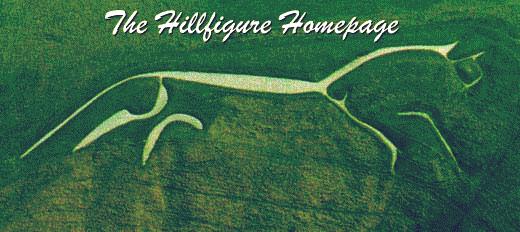
These pages are devoted to hillfigures which are known by many names, chalk hillfigures, chalk figures, hillfigures, hill figure, hill figures or sometimes white horses or chalk horses as the majority are horses, they are more generically known as geoglyphs.
Plenty of new drone photos of the hillfigures on my flickr gallery

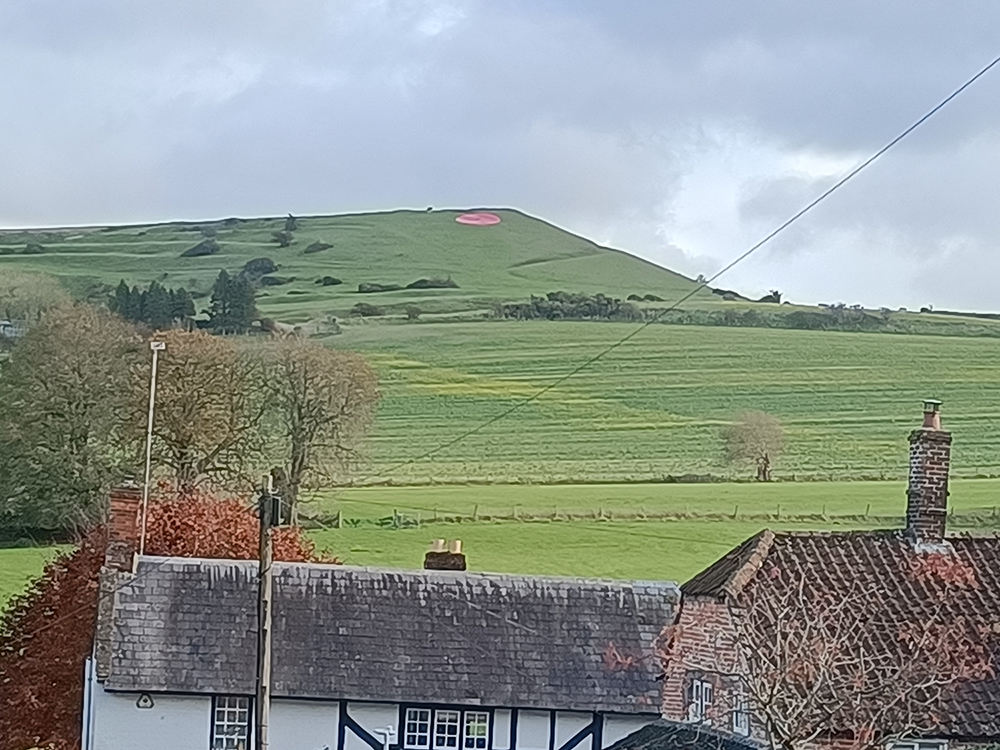
Heath and Lisa Crawley sent me a photo of the Bratton Poppy Hillfigure which is a temporary figure erected form Remembrance Sunday each year for the last several years, many thanks to them.
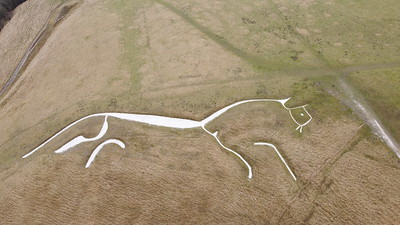
Sorry for the lack of updates this year there has been little news, I spent quite a bit of time using my drone to get aerial footage of the hillfigures, I still have a few to go but you can see the photos so far. Click on the Uffington White Horse to go to the Gallery.
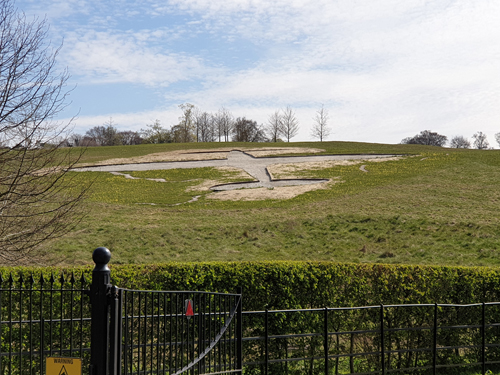
New Hillfigure at Beaverbrooke Estate, Surrey.
Cerne Abbas Giant: Snails show chalk hill figure may not be prehistoric
Restoration has been completed
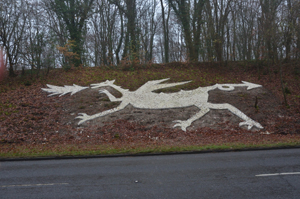
https://www.facebook.com/clandondragon
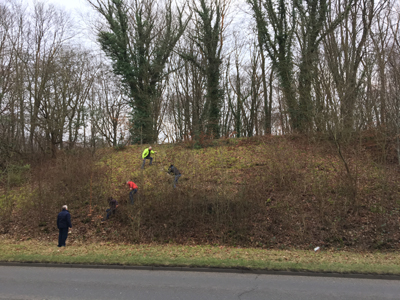
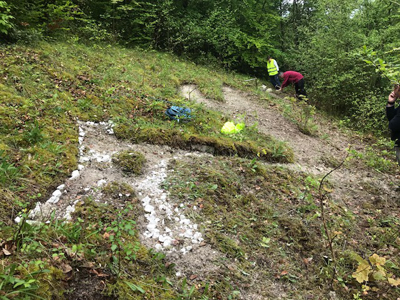
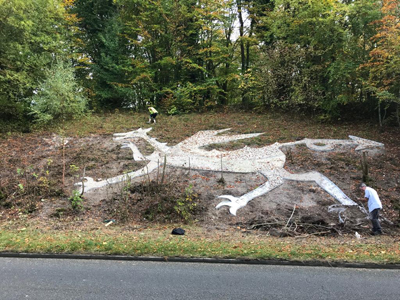
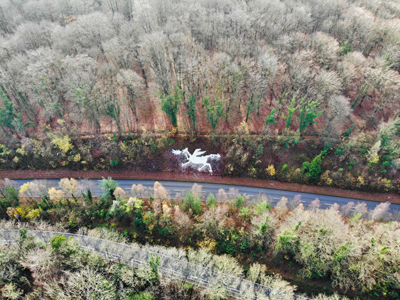
Thanks to Andy and Sonja Freebody for the restoration photos
Restoration has been completed
Before Chalking
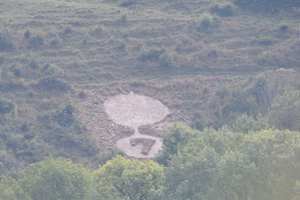
After
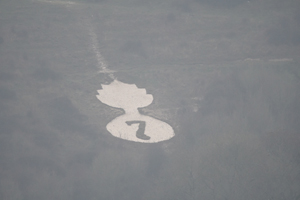
Here is a photo of if just before completion, it has now been completed.
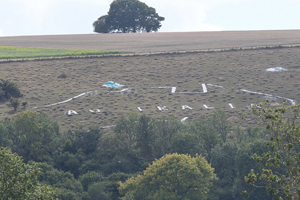
The Royal Warwickshire regiment Badge has been restored and is looking very nice. Plans are afoot to restore the 7th (City of London) Battalion of the London Regiment Badge "Shiny 7"
More information on the website sutton-down-badges.com
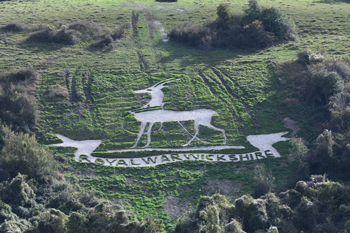
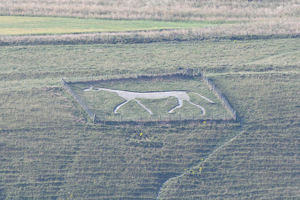
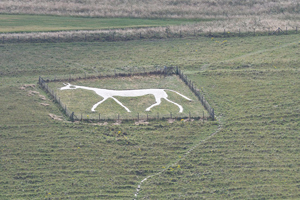
I was luck enough to attend the 80th Birthday of the Pewsey Horse and helped in its cleaning.
Before and After
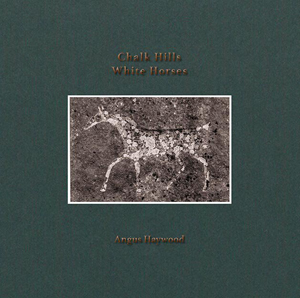
Angus Heywood (2016) Chalk Hills White Horses
Photographer and author, Angus Haywood, documented the chalk drawings of southern England on black and white film, observing their environment, aesthetics and scale. The negatives were hand-printed on a glossy, warm tone, fibre based paper using traditional printing techniques in the darkroom, before being post produced using contemporary, industry-specific digital technology.
Each of Angus’ photographs is juxtaposed with a carefully selected lino-cut, with each image informing and inspiring the other. This in turn, makes Chalk Hills White Horses greater than the sum of its very impressive parts and creates both a powerful and compelling visual narrative.
ISBN 978-1-909660-68-7, Available from www.facebook.com/angushaywoodphotography
Fovant Down Poppy - New Hillfigure
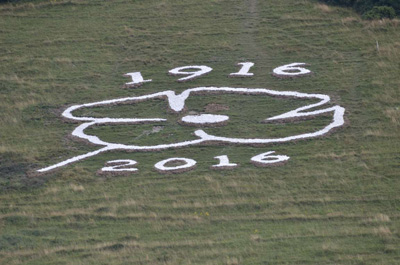
A Dragon in Suffolk
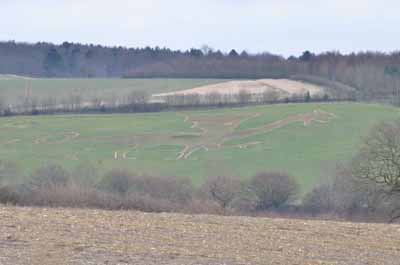
Many Thanks to Steve Hamilton to alerting me to these figures
A set of four horses in Lutterworth
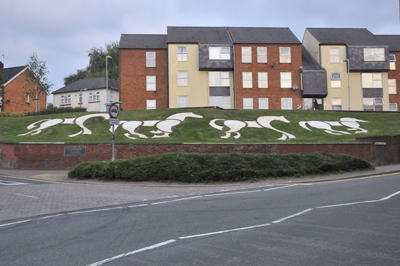
Many Thanks to Steve Hamilton to alerting me to these figures
A pterodactyl in Wiltshire
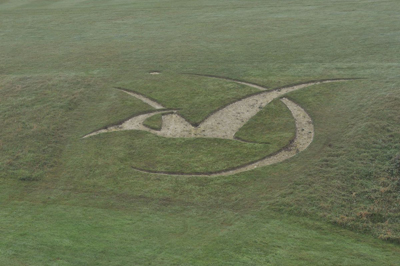
Many Thanks to Rowan and Lisa Crawley for alerting me to this figure
A CND badge in Brighton
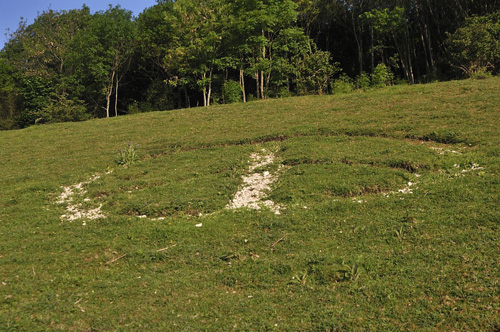
Many Thanks to Martyn Gadd for the tip off.
Also nearby in Hove a finger maze
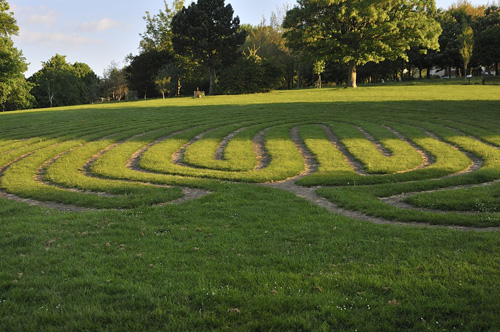
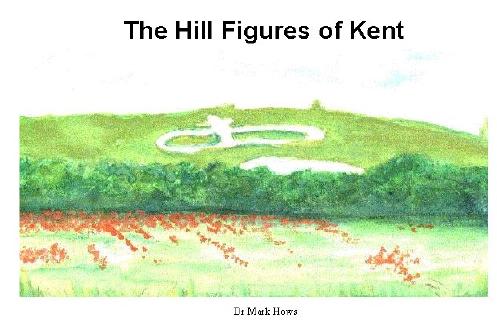
Dr Mark Hows (2006) The Hillfigures of Kent 1st edn.
some full colour photographs.
Available from this website £1.50 inc p&p
E-Mail Me for more details
I will happily give evening talks on any aspect of hillfigures, no charge just travel expense
Below are Points of Interest (POI) files for use with a Tom Tom GPS system. The ASC file is the text file with the data in converted to Long/Lat, the OV2 file is what has to be downloaded to the GPS and the BMP file is the image that a GPS displays on screen
To download right click on the link and select save target as
Hill Figures.ov2
Many Thanks to Dave Leach for his help in creating these GPS files
Google Earth waypoints for hillfigures and a few related figures. Note not all hillfigures are on the file as they are not yet available on google earth.
Talks
re-imbursement, note I live near Cambridge
E-Mail Me for more details and availablilty.
Find out about the author and how you can help the Hillfigure Homepage Here.

Hill Figures.asc
Hill Figures.bmp

Background
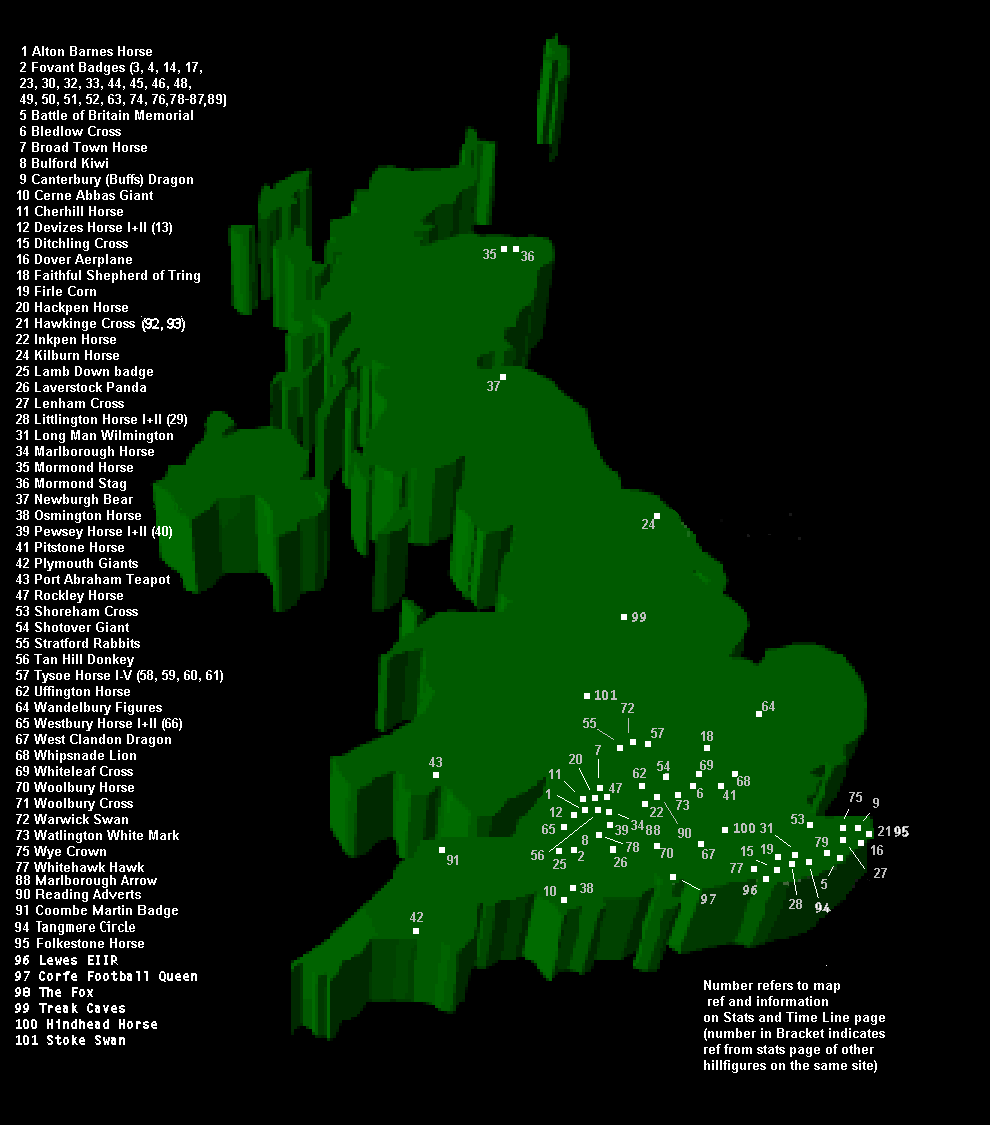
Scattered throughout southern England are currently some 57 hill figures (and maybe more with some unconfirmed figures and sometimes an exciting discovery) cut into the abundant chalk downlands, the most famous of these is the White horse of Uffington on the Berkshire downs. There are also three hill figures in the north, one in Yorkshire and two figures cut into quartz in Aberdeenshire. Unfortunately another 57 hill figures now lost (there may be more) including the most unusual figures the Red horses of Tysoe cut into the red loam soil of Warwickshire. Four of these figures can just about be seen but are in danger of being lost forever.
Hill figures are limited to the UK apart from a few exceptions mainly colonial countries, however similar figures are found all over the world from Africa to the Americas.
The area of greatest interest is Wiltshire, where there are some eight visible horses (another two have long since disappeared), and the more modern military badges at Fovant Down, the Bulford Kiwi and the now almost lost Laverstock Panda. The Inkpen horse (no longer visible) and the Uffington horse are also very close to the Wiltshire county boundary making this region the most important for Hill figures. They range in age the oldest being the 3000 year old Uffington white horse and the youngest being the Folkestone Horse (2003).
Please remember do not walk on the figures, and follow the countryside code, I am happy to offer visit advice
As a webmaster of a site dealing with megalithic remains in the
British Isles and northern Europe, would be saddened if the coverage
given to megaliths on these pages led to their alteration, damage or
destruction. It is therefore suggested to the readers of these pages the
following guidelines, to be observed when visiting any of these
monuments.
Get permission to visit monuments on private land. Permission is
usually granted if asked for, but repeated trespass could lead to access
being denied to all of us, and prosecution of the trespasser.
Treat the countryside around the monument with care. Irresponsible
behaviour on either public or private land could lead to access
restrictions, or complete denial of access to the monument such as is the case at Stonehenge during
midsummer.
No valuable objects are likely to exist at, in or under the monuments. Do not dig or disturb the site in
any way.
Any discovery made at a monument should be reported to the local museum. Every clue that aids in
the understanding of these places can then be shared by all who wish to know.
Use the monument in whatever way you choose, for
scientific investigation
experiential satisfaction
religious practices
but do not move, mark or alter the monument in any way, even
temporarily. This specifically includes moving or re-arranging stones,
digging in or around the site, use of metal detectors, burning candles
on the stones or daubing stones with paint.
Much damage is done accidentally by people who mean no harm.
Think twice, and don't do anything which would cause degradation to
the monument such as climbing on it or lighting fires nearby.
Through adherence to these simple guidelines we hope that the stones which have survived the
countless centuries to remain to us now, will not fall victim to the generations of the 21st century. We
who are the most knowledgable and capable of people are thereby mandated to be the most responsible.
Dr Mark Hows is a member of
The
Stone Circle Webring
Click for the [
Next Page |
Skip It |
Next 5 ]
Want to join The Stone Circle? Click here for
info .
Charter of Responsible Megalithic Webmasters
Hill Figures, hillfigures, hillfigure, Hill Figure, hill figure, white horse, whitehorses, whitehorse, chalk horse, british hill figure, ancient hill figure, figures on the hill, wiltshire white horses, Chalk Hill Figures, Hill Figures, turf art, Chalk Cuts, Leucippotomy,
